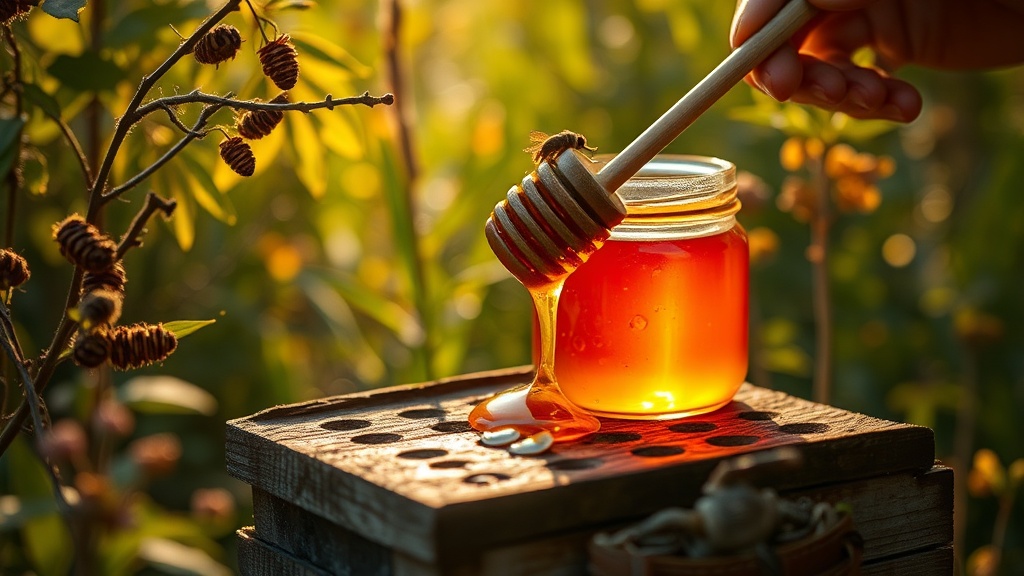
Picking the Best Local Honey in Mont-Saint-Hilaire

This guide explains how to identify high-quality, local honey produced right here in the Mont-Saint-Hilaire area, how to distinguish between seasonal varieties, and how to ensure you're buying authentic products from local apiaries. You'll learn the specific markers of quality for Quebec honey and where to find the best jars in our community.
Finding real honey isn't as simple as grabbing a plastic bear off a grocery store shelf. Most people don't realize that much of the "honey" in big-box stores is actually highly processed, stripped of its natural pollen, and often blended with syrups. If you want the real deal—the stuff that actually tastes like the wildflowers around Mont-$\\text{Saint}$-Hilaire—you have to know what to look for.
What Makes Local Honey Different From Store-Bought?
The primary difference lies in the level of processing and the presence of natural pollen and enzymes. Local honey from our region contains the specific floral notes of the Mont-Saint-Hilaire ecosystem, whereas commercial honey is often ultra-filtered and heat-treated to prevent crystallization.
When you buy honey from a local producer, you're getting a living product. Heat-treating honey (a process called pasteurization) kills the beneficial enzymes and can actually destroy the subtle flavors of the nectar. If you've ever noticed that your honey turns hard or grainy in the pantry, don't throw it out—that's actually a sign of high quality. It means the honey hasn't been over-processed. Pure honey naturally crystallizes over time.
Local honey also provides a sense of "terroir." Just like wine, honey reflects the environment it comes from. A honey harvested near the base of the mountain during a clover bloom will taste vastly different from a honey harvested in the late summer near the apple orchards. It's a snapshot of our local season in a jar.
For those interested in the science of what makes honey a unique substance, the Wikipedia page on honey provides an excellent breakdown of its chemical composition and biological properties. It's a fascinating read if you want to understand why it never truly spoils.
How Can You Tell if Your Honey is Pure?
You can tell if your honey is pure by checking for the presence of fine pollen grains and observing its crystallization patterns. Authentic, unheated honey will eventually become opaque and firm, while highly processed honey stays clear and liquid for much longer.
Here are a few ways to test your honey at home:
- The Water Test: Drop a teaspoon of honey into a glass of water. Pure honey will sink to the bottom in a solid clump. If it starts dissolving immediately, it might be diluted with sugar syrup.
- The Texture Check: Real honey is viscous and heavy. If it feels thin or watery, it has likely been adulterated.
- The Aroma Test: Give it a sniff. High-quality local honey should have a distinct floral or earthy scent. If it smells like nothing at all, it’s likely been over-refined.
I always tell people to look at the label first. If the label just says "Honey-Flavored Syrup," put it back. You want to see a specific variety or at least a clear indication of the producer. In Quebec, you should also look for the MAPAQ (Ministère de l'Agriculture, des Pêcheries et de l'Alimentation) standards to ensure the product meets provincial food safety and quality guidelines.
One thing to watch out for is the "clear liquid" trap. Many consumers think clear, golden liquid is "better" because it looks cleaner. In reality, that clarity often comes from high-heat filtration that strips the honey of its nutritional value. If you want the good stuff, embrace the grit and the crystals.
Which Type of Honey Should You Buy?
The best type of honey depends entirely on how you plan to use it—whether for baking, tea, or eating straight from the spoon. Different floral sources produce different flavor profiles and viscosity levels.
In our part of Quebec, you'll frequently encounter a few specific varieties. Here is a breakdown of what to expect from the most common local types:
| Honey Type | Flavor Profile | Best Use Case |
|---|---|---|
| Clover Honey | Mild, sweet, and classic. | Perfect for tea and daily toast. |
| Wildflower Honey | Complex, varying by season. | Great for cheese boards (try it with Brie!). |
| Buckwheat Honey | Strong, earthy, and robust. | Excellent for medicinal use or heavy baking. |
| Lavender/Floral Honey | Light, aromatic, and delicate. | Ideal for drizzling over yogurt or fruit. |
If you're looking for something to pair with a sharp cheddar or a creamy goat cheese, I highly recommend a darker, more robust honey like buckwheat. The contrast between the sweetness of the honey and the saltiness of the cheese is incredible. It's a way more interesting way to enjoy your breakfast or an afternoon snack.
If you're already out gathering local goods, you might want to check out my previous post on finding the best seasonal produce at the Mont-Saint-Hilaire market. Getting your honey and your vegetables from the same local sources ensures you're getting the highest quality possible.
Where to Find the Best Local Honey in Mont-Saint-Hilaire?
The best local honey is typically found at farmers' markets, local farm stands, or directly from small-batch apiaries in the Mont-Saint-Hilaire area. You won't find the premium stuff in the international aisle of the supermarket.
The most reliable way to find high-quality honey is to visit our local markets. The producers there are usually happy to talk to you about their process. They'll tell you exactly when the honey was harvested and what the bees were feeding on. This transparency is something you just won't get from a massive commercial brand. If a producer is willing to explain the difference between their spring harvest and their fall harvest, that's a great sign.
Check out the local farm stands along the outskirts of town. Many of these family-run operations have been around for generations. They often sell honey that hasn't been touched by heavy machinery—just pure, raw, and delicious. It's a much better way to support our local economy too.
Don't be afraid to ask questions. When I'm buying honey, I always ask: "Is this raw?" and "Has it been pasteurized?" If the answer is "yes" to pasteurization, I'll likely keep looking. You want the version that retains all those natural properties. It's a small detail, but it makes a massive difference in the final taste and the health benefits you receive.
One thing to keep in mind: if you're buying from a small stand, always check the seal. While raw honey is great, you still want to ensure the container has been handled properly. Most local producers use glass jars, which is actually better for preserving the flavor and preventing any chemical leaching from plastic.
It's worth noting that buying local isn't just about the taste—it's about the ecosystem. When you buy honey from a local beekeeper, you're supporting the pollinators that keep our local flora thriving. It's a cycle that benefits the entire Mont-Saint-Hilaire community.
Next time you're at the market, look for the jars that look a little less "perfect." Look for the ones with slight variations in color or texture. That's the sign of a product that actually came from our soil and our flowers. You'll taste the difference immediately.
Steps
- 1
Check the Source Label
- 2
Observe the Color and Clarity
- 3
Smell for Floral Notes
- 4
Test the Texture